
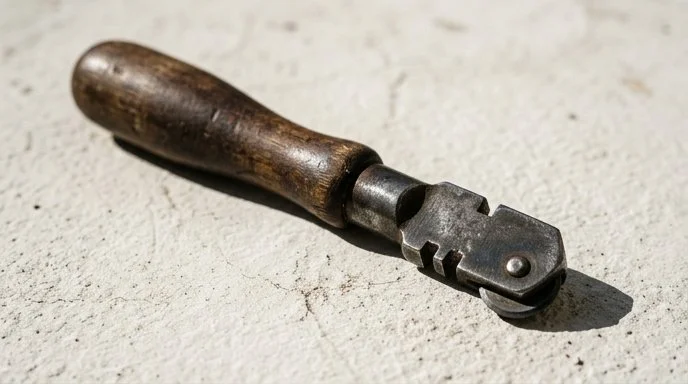
The Unexpected Mystery of an Ancient Tool: The Glass Cutter Revealed
Have you ever stumbled upon an object that leaves you scratching your head, wondering what it is and how it works? Many have tried to guess what this intriguing item could be—but the answer is as surprising as it is fascinating. Join us on a journey to uncover the mystery behind a tool that has captured the curiosity of many.
At first glance, this ancient artifact looks like a medical tool, a precision instrument, or perhaps even a forgotten curiosity from a bygone era. However, once its purpose is revealed, everything falls into place. Prepare yourself—once you know what it is, you’ll look at such objects with new eyes!
A Closer Look at the Glass Cutter
So, what’s the big reveal? The tool in question is none other than a glass cutter, specifically a Shaw glass cutter from England. Noted for its fine craftsmanship, this tool is designed for the precise cutting of thin panes of glass. If you look closely, you’ll notice an inscription—“SHAW ENGLAND”—on the metal head, along with a rotating scale that ranges from 1 to 6. This detail signifies its identity as an old professional instrument trusted by glaziers for generations.
Understanding the Functionality
Contrary to popular belief, a glass cutter doesn’t cut glass in the same way a knife cuts through food. Instead, it creates a line of weakness in the glass surface. This incision is not about slicing; it’s about scoring a precise line. When pressure is applied along this score line, the glass breaks cleanly, thanks to the controlled weakness established by the cutter.
Here’s how it works in practice:
- Measure and Mark: Start by measuring and marking where you want to cut the glass. A ruler is vital for accuracy.
- Scoring the Glass: Hold the glass cutter straight and slide it along the marked line with consistent pressure. One continuous score is all it takes—going over the same line multiple times can actually damage the glass.
- Breaking the Glass: After scoring, gently apply pressure to break the glass along the scored line—this can be done by hand or with specially designed pliers.
The Importance of the Glass Cutter in Glasswork
The glass cutter is a crucial tool used in various aspects of glass manufacturing and repair. Whether it’s cutting window panes, making or repairing frames, or engaging in small workshop tasks, this tool is indispensable for achieving clean, precise cuts on thin to medium-thickness glass.
A Timeless Design
Remarkably, this tool has origins dating back to the 19th century, when it began to take the shape we recognize today. Early glass cutters were often diamond-tipped, but the shift to wheel-type models made them easier and more accessible for artisans. Over time, despite advances in technology, the fundamental design—featuring a wooden handle, a metal head, and a rotating wheel—remains largely unchanged.
Why This Tool Captivates Us
What makes the glass cutter not just an ordinary tool, but a captivating subject of intrigue? Well, it’s precisely its enigmatic nature. Without context, it appears almost incomprehensible. However, once its function is revealed, every aspect of its design makes sense, showcasing the thoughtful engineering tailored for its specific role in glasswork.
This exploration also serves as a reminder of how the mundane can become mysterious. Everyday tools, when removed from their contexts, can seem puzzling and evoke curiosity about their purpose and history.
Conclusion: Embracing the Ingenious Craftsmanship
Behind this seemingly puzzling object lies a testament to artisanal know-how that has been passed down through generations. The traditional glass cutter is not only functional but also a symbol of the craftsmanship that continues to thrive today.
So next time you encounter a tool with an enigmatic presence, take a moment to ponder its story. There may be more to its design and purpose than meets the eye. The world is full of hidden wonders waiting to be uncovered—sometimes, all it takes is a little curiosity to reveal their true nature!