
What That Shiny Green Rainbow Sheen on Your Slow-Cooked Pork Roast Really Means
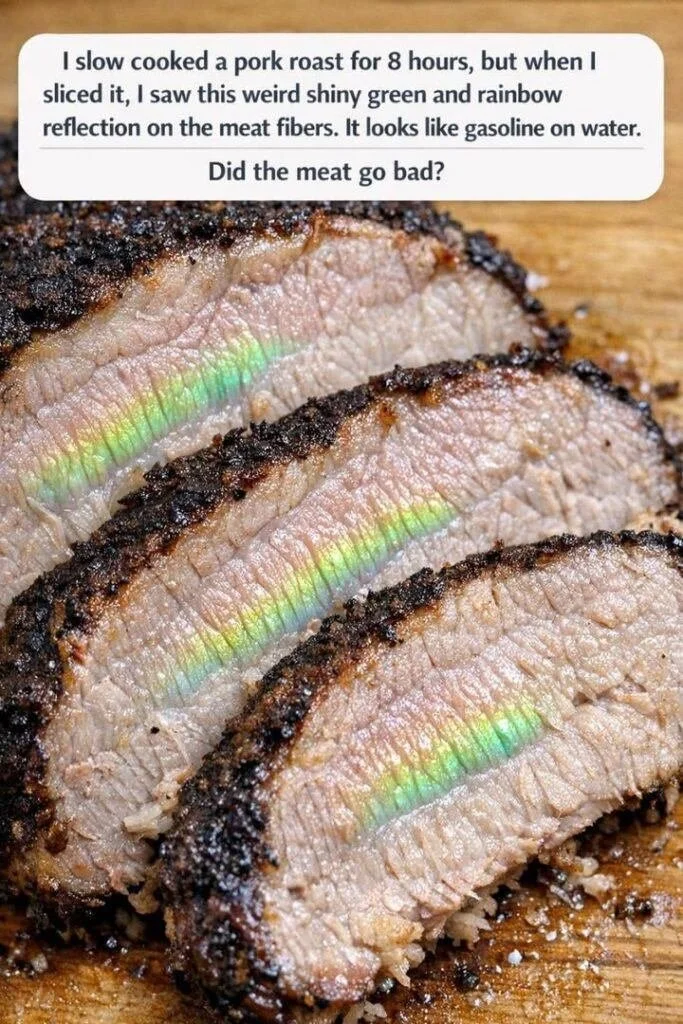
Cooking a pork roast to perfection is a culinary achievement many home chefs aspire to. The process of slow cooking, with its promise of tender, flavorful meat, has gained popularity for its simplicity and ability to infuse depth into dishes. However, when you invest hours into slow-cooking a pork roast only to find a mysterious, shiny green and rainbow reflection on the meat fibers when you slice into it, it can be unsettling.
At first glance, this iridescent sheen may seem alarming—reminiscent of gasoline on water. Questions about the safety and edibility of the meat naturally arise. Is this a sign that the pork has gone bad, or is there a scientific explanation behind this phenomenon? Understanding the reasons behind this visual occurrence can help alleviate concerns and ensure that your meal is both safe and delicious.
Why This Works
The shiny, colorful appearance of the pork is not a sign of spoilage but rather a natural optical phenomenon. This optical illusion can occur due to the structure of the meat itself and the way light interacts with it.
1. What That Shiny Green, Rainbow Sheen on Pork Really Is
The iridescent sheen observed on pork, as well as other meats, is typically caused by the diffraction of light rather than spoilage. When light hits the meat, it bends and splits into different colors, creating a spectrum similar to the sheen seen on a soap bubble or oil on water. This reflection is particularly noticeable on thinly sliced cuts that are densely packed with muscle fibers. Importantly, this effect is not uncommon and is usually harmless. Its presence does not necessarily indicate that the meat is unsafe to eat.
2. The Science of Meat Iridescence and Light Diffraction
The iridescent appearance in meats stems from the structural composition of muscle fibers. When light strikes these tightly packed fibers at certain angles, it refracts and separates into various wavelengths, producing that rainbow-like effect—similar to how a prism disperses light. This phenomenon, known as light diffraction, occurs when light waves encounter structures comparable in size to their wavelengths. In meat, the parallel muscle fibers act like diffraction gratings, scattering light. This is purely a physical effect and does not compromise the meat’s safety or quality.
3. How Muscle Fibers and Cutting Angle Create the Gasoline-on-Water Look
The “gasoline-on-water” appearance is largely influenced by how the meat is sliced. The angle of the knife relative to the muscle fibers can enhance or reduce the iridescent effect. If the knife slices across the grain at a shallow angle, more surface area of the fibers is exposed, increasing light diffraction and making the rainbow sheen more pronounced. Cutting at a steeper angle may reduce the effect, making it less noticeable.
4. When Iridescent Pork Is Harmless—and Safe to Eat
In most cases, an iridescent sheen on pork is harmless and not a sign of spoilage. If the pork was stored properly, cooked thoroughly, and shows no other signs of spoilage, it is safe to eat. For food safety, pork should reach an internal temperature of at least 145°F (63°C), followed by a three-minute rest time. This ensures that harmful bacteria are eliminated.
5. Red Flags That Mean Your Pork Roast Has Gone Bad
While iridescence is typically harmless, other signs may indicate spoilage:
- A sour, ammonia-like, or otherwise unpleasant smell
- A sticky or slimy surface texture
- Dull gray, greenish, or patchy discoloration
- Visible mold
If you notice any of these signs, it is best to discard the meat.
6. Smell, Texture, and Color Checks You Should Always Do
To determine freshness, consider the following:
- Smell: Fresh pork has a mild scent. Sour or strong odors signal spoilage.
- Texture: Fresh pork should be firm and slightly moist—not slimy or sticky.
- Color: Cooked pork should appear white to light pink. Raw pork should be pinkish-red. Gray or green tones may indicate spoilage.
7. Does Slow Cooking for 8 Hours Increase Food Poisoning Risk?
Slow cooking can be safe, provided the meat reaches a safe internal temperature. Food safety concerns arise if meat remains too long in the “danger zone” (40°F–140°F / 4°C–60°C), where bacteria multiply rapidly. A properly functioning slow cooker will eventually bring food to a safe temperature. Using a meat thermometer is the best way to confirm doneness.
8. How Storage, Packaging, and Brining Affect the Rainbow Shine
Vacuum-sealed packaging can press muscle fibers tightly together, enhancing light diffraction and making iridescence more noticeable. Brining may also align and swell muscle fibers, increasing the visual effect. While these factors can intensify the sheen, they do not indicate spoilage.
9. Simple Kitchen Tests to Tell Optical Illusion from Spoilage
To distinguish harmless iridescence from spoilage:
- Inspect visually for mold or abnormal discoloration.
- Smell the meat for sour or off odors.
- Check texture for sliminess.
If the pork passes these checks, the rainbow sheen is almost certainly an optical effect.
10. Tips to Reduce the Rainbow Effect
If you’d prefer to minimize the iridescent look, here are some tips:
- Slice against the grain at a steeper angle.
- Let the meat rest before slicing.
- Use a sharp knife for cleaner cuts.
These adjustments can reduce visible light diffraction without affecting flavor.
11. When in Doubt: Follow Basic Food Safety Rules
Always cook pork to an internal temperature of at least 145°F (63°C) with a three-minute rest. Practice good kitchen hygiene, wash hands and surfaces thoroughly, and refrigerate leftovers promptly. If you are ever uncertain about the safety of meat, it is best to discard it. When it comes to food safety, caution is always the wiser choice.
Conclusion
The iridescent sheen that sometimes graces your slow-cooked pork roast is a fascinating optical effect rather than a reason for concern. By understanding the science behind it, you can confidently slice into your meal and enjoy the fruits of your culinary labor. Keep those food safety tips in mind, and you’ll ensure that every bite is both safe and delicious.