
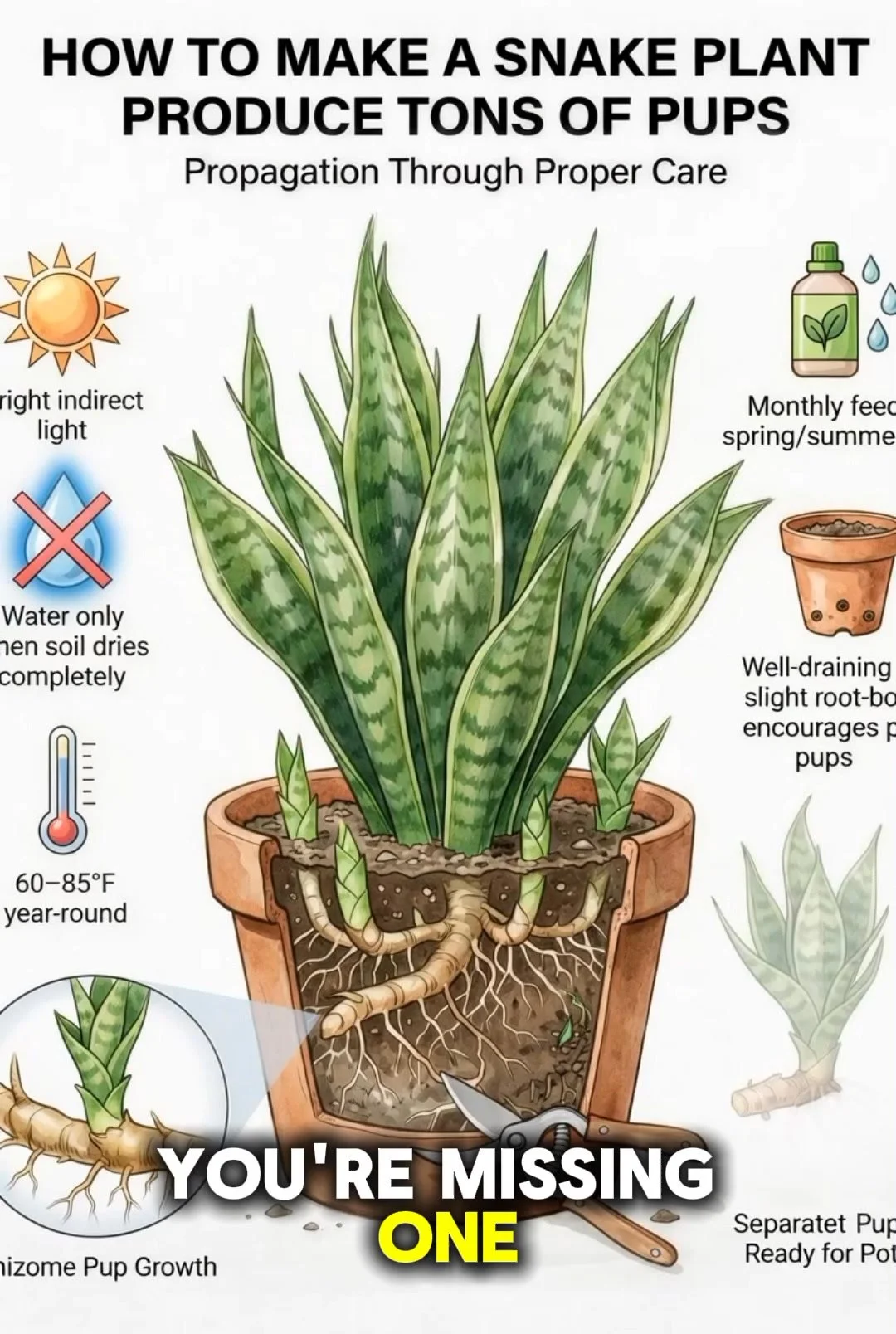
This Easy Indoor Change Is Helping Snake Plants Produce More Pups
Have you ever watched your beloved Snake Plant (Sansevieria) struggle to produce pups, those adorable little offsets that make your plant collection feel complete? If you’ve found yourself wondering about the secret to encouraging your Snake Plant to thrive and produce more pups, you’re not alone. It’s a common frustration among indoor gardeners who want to make the most out of their leafy friends.
But don’t worry—today, we’re going to explore an easy indoor change that can help your Snake Plant produce more pups than you ever thought possible!
The Problem with Snake Plants
Snake Plants are generally known for their hardiness and low maintenance, which is why they’re so popular among plant enthusiasts. However, even these tough guys can hit a lull when it comes to producing new growth. Many people find that their Snake Plants may grow tall or wide but seem stubborn about generating pups.
Why does this happen? A variety of factors could be at play: inadequate light, improper watering, and soil quality, to name a few. Many homeowners don’t realize that these plants have specific needs that, if not met, can slow down their reproduction and growth. This can leave you feeling frustrated, especially if you’re eager to expand your green family without spending a fortune on new plants.
The Secret to More Pups
So, what’s the secret? It all comes down to repotting your Snake Plant in a specific way. This approach not only rejuvenates the plant but also stimulates it to produce pups effectively.
Why This Method Works
Repotting can sound intimidating, but it’s crucial for promoting healthy growth. By changing up the environment of your Snake Plant—particularly its soil and pot size—you provide it with the nutrients and space it needs to thrive. Fresh soil means better drainage and a boost in nutrients, while a little extra space allows your plant to establish a healthy root system that promotes the growth of pups.
Here’s how to do it:
Step-by-Step Guide to Encouraging Pups
What You’ll Need:
- A healthy Snake Plant
- A slightly larger pot (make sure it has drainage holes)
- Well-draining potting soil (mix of potting soil, sand, and perlite is ideal)
- A trowel (for manipulating the soil)
Preparation:
-
Choose the Right Time: Early spring is the best time to repot as the plant enters its growing season.
-
Prepare Your Pot: Ensure it’s clean and has proper drainage. A slightly larger pot allows for growth but doesn’t need to be excessively large.
-
Prepare Fresh Soil: Mix potting soil, sand, and perlite together for excellent drainage.
How to Repot:
-
Carefully remove your Snake Plant from its current pot. You may need to gently squeeze the sides of the pot to loosen the soil.
-
Inspect the roots. If they’re circling around the root ball, use your fingers or a trowel to tease them apart gently. This encourages outward growth.
-
Place the plant in the center of the new pot and fill in with your prepared soil mix.
-
Water the plant lightly after repotting to help settle the soil but avoid overwatering.
When to Use It:
After repotting, keep an eye on the moisture levels and give your Snake Plant bright, indirect light to encourage it to acclimate and begin producing pups.
Frequency:
Repot every 2-3 years or when your plant visibly outgrows its pot to keep stimulating growth.
What Results to Expect
After making this simple change, many gardeners report seeing pups within a few months! Your Snake Plant will not only freshen up its appearance but also thrive in its new environment. Soon enough, you’ll be able to transplant those pups and create a whole family of Snake Plants, or even share some with friends!
Extra Useful Tips
-
Avoid Overwatering: When repotting, it’s easy to assume the plant needs more water in fresh soil. However, Snake Plants prefer a dryer environment.
-
Fertilize Sparingly: Use a diluted succulent fertilizer during the growing season to provide extra nutrients.
-
Watch the Light: Snake Plants prefer bright, indirect light but can also tolerate low-light conditions. Just remember that the brighter the light, the faster they’ll grow.
Conclusion
Embracing this fun and easy indoor change can help you unlock the full potential of your Snake Plant. By repotting it properly, you’re not just enhancing its growing conditions—you’re giving it the love and space needed to thrive and produce those adorable pups.
So grab your tools, and let’s give your Snake Plant a chance to shine. Happy gardening!
If you have any questions or want to share your own Snake Plant success stories, feel free to leave a comment below. We’d love to hear from you!