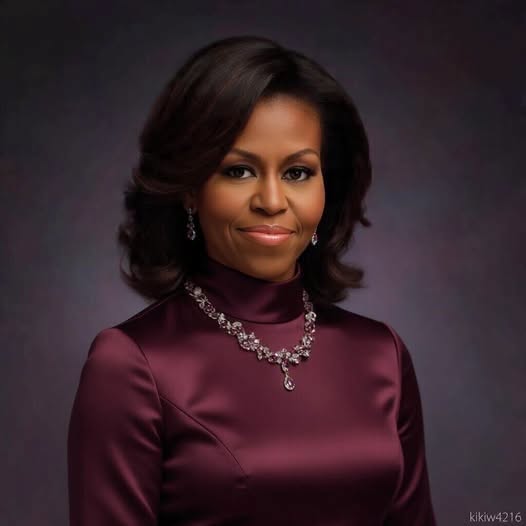
For Michelle Obama, life after the White House has brought something she did not always have during her years in public service: the freedom to make decisions simply because they are right for her.
In a series of candid interviews and podcast conversations, particularly throughout 2025, the former First Lady opened up about entering a very different stage of adulthood. With daughters Malia and Sasha now grown and living independently, Obama has described the experience as both liberating and challenging.
At 61, she has been reflecting on what it means to make choices based less on obligation and more on personal priorities.
That message became especially clear during conversations on Work in Progress, On Purpose with Jay Shetty, and her own IMO with Michelle Obama and Craig Robinson podcast. Rather than presenting this period as a perfect transformation, Obama has described it as a process of figuring out who she is when some of the roles that defined her for decades no longer require the same attention.
A New Kind of Freedom
One of Obama’s most striking reflections came in April 2025, when she discussed how different life feels now that her daughters are adults and her years as First Lady are behind her.
She explained that, for much of her adult life, decisions were shaped by responsibilities to other people. As a mother, wife, professional, and highly visible public figure, she often had to consider what her family, country, or public role required.
Now, she says, she has more room to ask a simpler question:
What do I actually want?
In her conversation with Sophia Bush on the Work in Progress podcast, Obama described this as a period in which her choices could finally be centered on herself. She also acknowledged that making those choices publicly has not always been easy, particularly because people sometimes interpret a woman’s independence as evidence that something is wrong.
That observation became particularly relevant when her decision not to attend several high-profile political and ceremonial events generated speculation about her marriage.
For Obama, however, the situation represented something much more personal: learning that she could say no without automatically feeling guilty.
The Empty-Nest Transition
Becoming an empty nester can be an emotional turning point for many parents, and Obama has spoken openly about experiencing that transition herself.
Her daughters, Malia and Sasha, are now adults with lives of their own. After years of placing family responsibilities at the center of her schedule, Obama has had to reconsider how she wants to spend her time.
That freedom can sound simple from the outside.
In reality, it can require considerable adjustment.
When a person spends decades being needed by other people, having fewer obligations can initially feel unfamiliar. Obama has suggested that this is part of what makes her current chapter so significant.
During her 2025 appearance on Jay Shetty’s On Purpose, she revealed that she was in therapy while navigating this transition. She described therapy as a kind of personal “tune-up” as she moved into the next stage of her life.
Rather than portraying therapy as evidence that something is wrong, she framed it as a way to understand herself better during a period of major change.
Why Therapy Became Part of the Conversation
Obama has discussed therapy before, but her 2025 comments placed it within a new context.
She was no longer simply dealing with the pressures of public life or motherhood. She was also confronting a question that many people eventually face:
Who am I when the responsibilities that once defined me begin to change?
For Obama, that question involved leaving behind the role of First Lady, watching her daughters become independent, and reconsidering expectations that had shaped her choices for years.
She has also connected personal growth with examining habits inherited from earlier generations.
The goal, as she has described it, is not to reject where she came from. Instead, it is to recognize which lessons remain useful and which patterns may no longer serve her.
That distinction makes her message particularly relatable. Personal growth does not necessarily require abandoning the past. Sometimes it means understanding the past well enough to make different choices in the present.
Michelle Obama and the Divorce Rumors
For Complete Cooking STEPS Please Head On Over To Next Page Or Open button (>)

Britney Spears: The Pop Legend Whose Music Defined a Generation
READ MORE »
Police Are Urging Everyone to Stay Away From This Area as a Major Emergency Unfolds
READ MORE »
An Elderly Woman Checked Into a Motel With a Secret. Then Three Men Arrived
READ MORE »
Pat Sajak with tears in her eyes make the sad announcement See more
READ MORE »
Urgent 3 Extremely dangerous storm just rolled over in B See more
READ MORE »