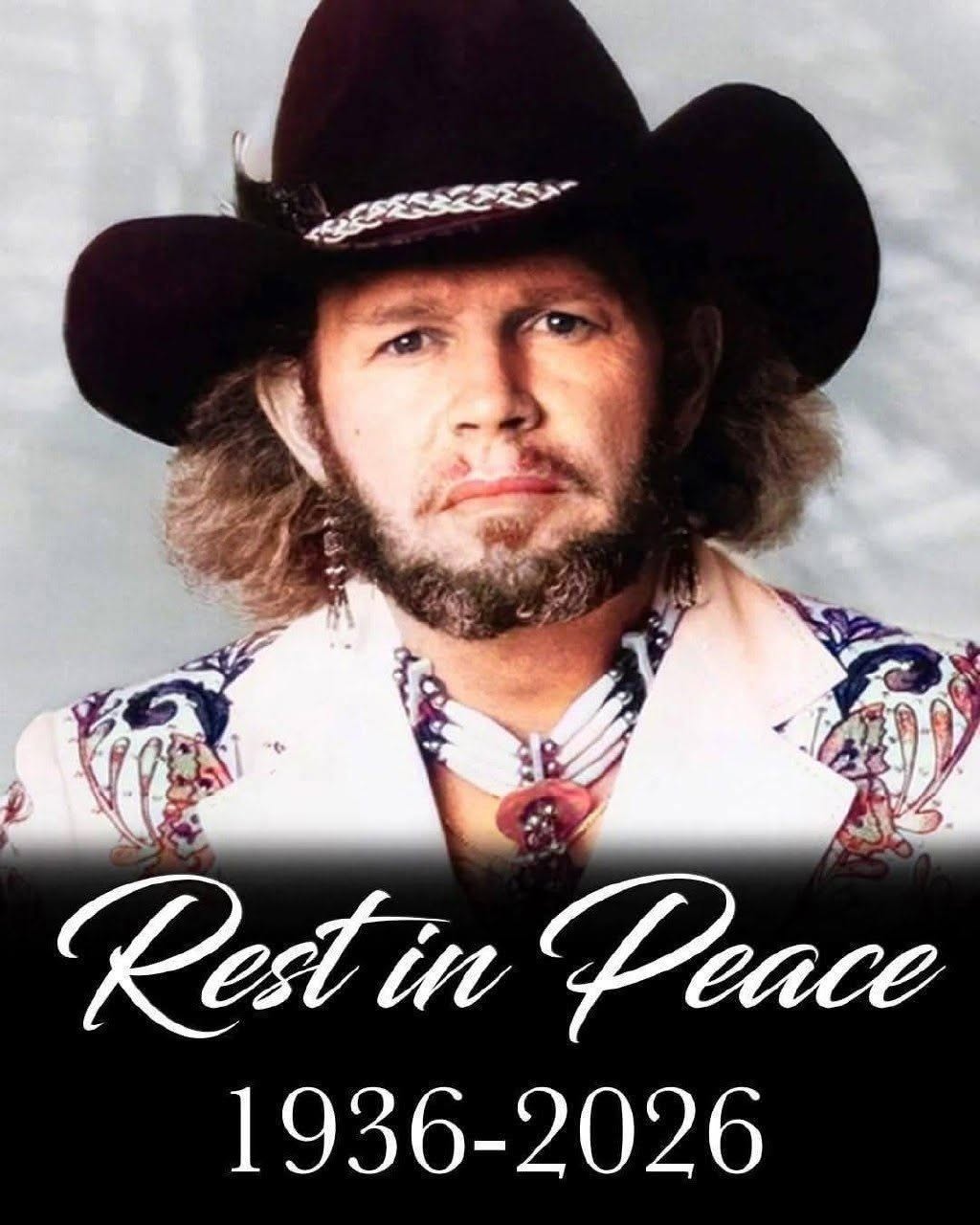
Country music has lost one of the most unconventional and controversial figures in its history.
David Allan Coe, the singer-songwriter whose rebellious personality and unmistakable approach to country music helped define the outlaw country era, died on April 29, 2026, at the age of 86. His death was confirmed by his wife, Kimberly Hastings Coe, and by a representative for the musician. According to his manager, Coe died at a hospital at approximately 5 p.m. The cause of death was not immediately disclosed.
For generations of country music fans, Coe was much more than a performer. He was a songwriter, storyteller, outsider, and larger-than-life personality whose career often seemed as unconventional as the music he created.
His catalog included memorable recordings such as “You Never Even Called Me by My Name,” “The Ride,” “Mona Lisa Lost Her Smile,” and “Longhaired Redneck.” He also wrote songs that became major hits for other artists, including Johnny Paycheck’s “Take This Job and Shove It” and Tanya Tucker’s “Would You Lay With Me (In a Field of Stone).”
His legacy, however, was never simple. Alongside his songwriting achievements and influence on outlaw country, Coe’s career included controversial recordings, disputed stories about his past, and a public image that frequently challenged conventional ideas about what a country artist should be.
David Allan Coe’s Death at 86
News of Coe’s death prompted tributes from musicians, country fans, and people who had followed his unusual career for decades.
His wife remembered him as a husband, friend, and confidant, while also describing him as one of the great singers and songwriters of his generation.
His representative confirmed that Coe died while receiving hospital care. Although he had experienced health problems during his later years, no specific cause of death was publicly disclosed in the initial reports.
For fans, the news marked the end of a career that had lasted for decades and left an unmistakable imprint on American country music.
Who Was David Allan Coe?
David Allan Coe was born on September 6, 1939, in Akron, Ohio.
His childhood and early adulthood were far removed from the polished world of Nashville entertainment. Coe spent significant portions of his youth and early adult life in reform schools and correctional institutions.
Those experiences later became an important part of the mythology surrounding his career. Coe frequently presented himself as an outsider who had lived a difficult life before finding a path through music.
Some of the more dramatic stories associated with his biography were disputed or difficult to independently verify. Nevertheless, the central fact of his story remained clear: Coe eventually transformed a troubled early life into a lengthy career as a professional musician and songwriter.
From Correctional Institutions to Nashville
By the late 1960s, Coe was pursuing music professionally.
He eventually made his way to Nashville, where he attempted to establish himself within the country’s competitive songwriting and recording community.
His appearance and behavior immediately made him stand out.
One of the most famous images associated with Coe was his use of a hearse while trying to attract attention around Nashville. His long hair, distinctive clothing, tattoos, and unconventional personality helped create an image that was almost impossible to confuse with that of a traditional Nashville performer.
But the image alone was not enough to build a lasting career.
Behind the theatrics was a songwriter capable of creating songs that other established performers wanted to record.
His First Recordings
Coe released his debut album, Penitentiary Blues, in 1970, following earlier recordings and performances that drew heavily from blues and the experiences of his early life.
His sound eventually became increasingly associated with country music, particularly as he established a relationship with Columbia Records.
The 1974 album The Mysterious Rhinestone Cowboy became an important milestone in his career and helped strengthen the unusual persona that followed him for decades.
Coe was never a conventional Nashville artist, and that difference became one of his greatest advantages.
“You Never Even Called Me by My Name”
One of David Allan Coe’s best-known recordings was “You Never Even Called Me by My Name.”
Written by Steve Goodman, the song playfully explored the familiar themes and stereotypes associated with traditional country music. Coe’s recording became closely identified with his career and helped establish him as one of the genre’s most recognizable personalities.
The song’s humor and self-awareness also reflected something important about Coe’s approach to music: he understood country music’s traditions while simultaneously enjoying the opportunity to challenge them.
“The Ride” and the Ghost of Hank Williams
For Complete Cooking STEPS Please Head On Over To Next Page Or Open button (>)

Britney Spears: The Pop Legend Whose Music Defined a Generation
READ MORE »
Police Are Urging Everyone to Stay Away From This Area as a Major Emergency Unfolds
READ MORE »
An Elderly Woman Checked Into a Motel With a Secret. Then Three Men Arrived
READ MORE »
Pat Sajak with tears in her eyes make the sad announcement See more
READ MORE »
Urgent 3 Extremely dangerous storm just rolled over in B See more
READ MORE »