
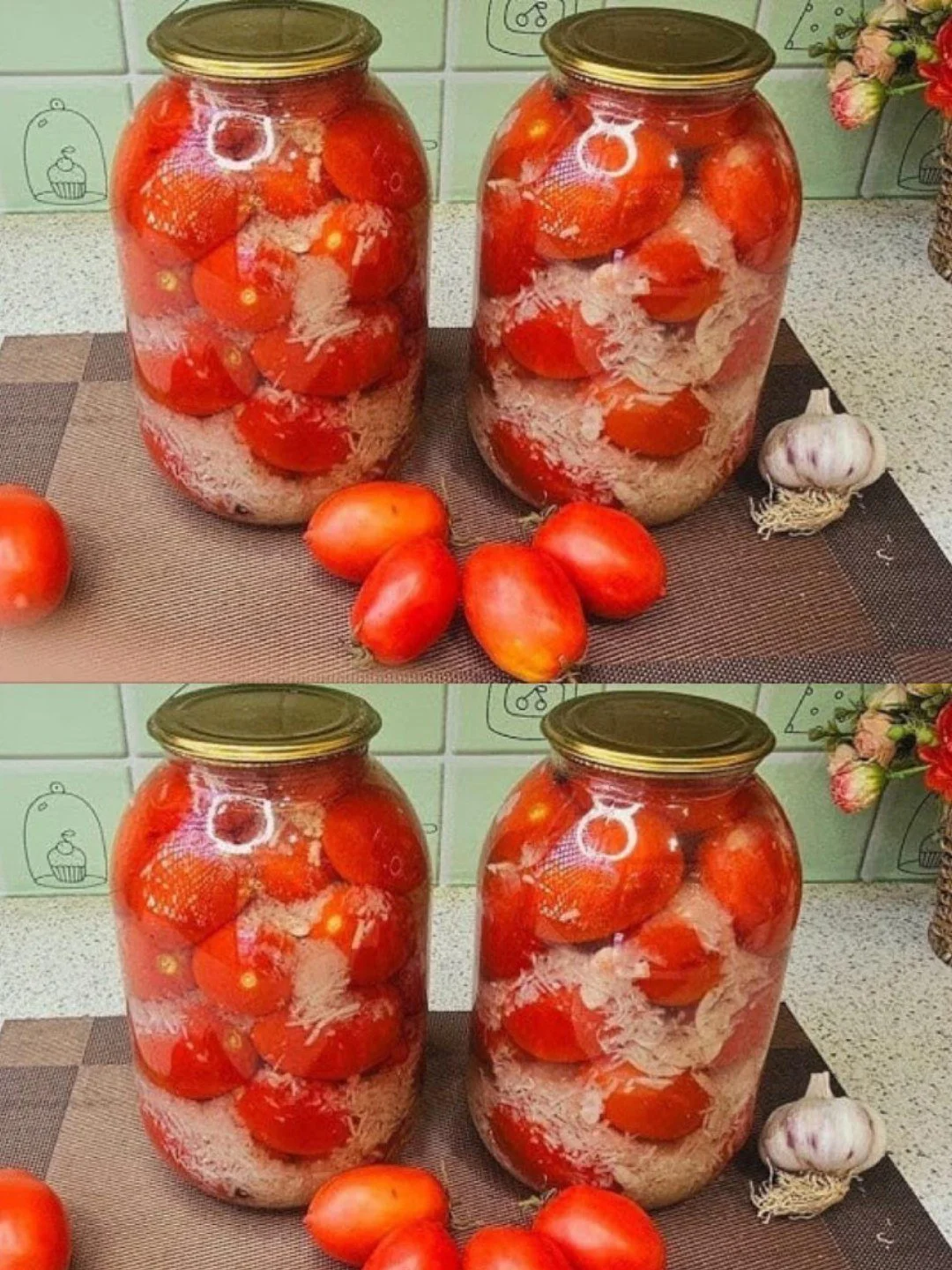
I’ve Been Storing Tomatoes This Way for 10 Years — And They’re Always as Fresh as Summer
How to Preserve Garden Tomatoes So They Taste Like August… Even in January
There’s a moment in late summer when the garden overflows. Vines sag under the weight of deep red, sun-warmed tomatoes, and you stand there, basket in hand, thinking: “If only I could bottle this flavor.” Not the canned paste, not the dehydrated bits, not the store-bought sauce that tastes like tin. But the real thing — juicy, bright, bursting with that August sunshine taste.
For over a decade, I’ve had a secret. It’s not complicated, not fancy—just simple, time-tested, and deeply satisfying. It’s called the Whole Tomato Jar Method—a gentle, low-cook preservation technique that keeps tomatoes whole, vibrant, and tasting as if they were just picked, even in the coldest months of winter. And every time I open a jar in February, steam rising, the scent filling my kitchen… I’m back in the garden. Let me show you how to do it — so you can taste summer, all year long.
Why This Method Beats Freezing, Drying, and Canning Sauce
- ❌ Freezing: Tomatoes turn mushy; texture ruined.
- ❌ Drying: Concentrated flavor, but loses freshness.
- ❌ Canned sauce: Cooked down — deep, but not “fresh.”
- ✅ Whole jarred tomatoes: Preserved at peak ripeness — tender, juicy, alive with flavor.
This isn’t about making ketchup or paste. It’s about preserving the essence of summer—with minimal processing and maximum taste.
What You’ll Need
- Fresh, ripe tomatoes: Firm, deep red, fragrant — no bruises.
- Glass jars with lids: Mason jars (pint or quart) — sterilized.
- Large pot: For blanching and water bath canning.
- Slotted spoon: For transferring tomatoes.
- Large bowl of ice water: For shocking after blanching.
- Salt (optional): A pinch per jar for depth.
- Lemon juice or citric acid (optional): For added acidity and shelf stability (recommended for long storage).
✅ No fancy tools? Just jars, a pot, and your hands.
Step-by-Step: How to Preserve Whole Tomatoes the Right Way
Step 1: Pick at Peak Ripeness
Choose tomatoes that are just ripe — not overripe or green. Pick them on a dry, sunny day—after the morning dew has evaporated. Varieties that work best include Roma (less watery), San Marzano, Early Girl, or any firm, flavorful heirloom.
✅ Never use refrigerated tomatoes — cold ruins texture and flavor.
Step 2: Blanch & Peel (Preserves Freshness)
Bring a large pot of water to a rolling boil. Score the bottom of each tomato with an “X.” Drop 3–4 tomatoes at a time into boiling water for 30–60 seconds, then use a slotted spoon to transfer them immediately to ice water. Once cool, the skins will slip right off.
✅ Why peel? Skins can become tough during storage — peeling ensures smooth texture.
Step 3: Pack the Jars
Sterilize jars and lids in boiling water for 10 minutes. Place whole or halved tomatoes into jars, packing them tight but gently. Press down slightly — they’ll release their own juice. Add a pinch of salt (optional) and 1⁄2 tsp lemon juice per pint (prevents spoilage and preserves color). Leave 1⁄2 inch of headspace at the top.
✅ Don’t overfill — liquid expands when heated.
Step 4: Seal & Process (Safe for Shelf Storage)
Wipe jar rims with a clean cloth. Screw on lids fingertip-tight. Place jars in a large pot with a rack (to prevent direct heat). Fill with hot water — cover jars by 1–2 inches. Bring to a gentle simmer (not a rolling boil) and process for:
- Pints: 35 minutes
- Quarts: 45 minutes
✅ This creates a vacuum seal — essential for safe, long-term storage.
Step 5: Cool & Store
Remove jars with tongs and place them on a towel-lined counter — do not disturb. Listen for the “ping” — the sound of lids sealing. After 12–24 hours, check seals by pressing the center; if it doesn’t pop, it’s sealed. Remove bands, label, and store in a cool, dark pantry.
✅ Shelf life: Up to 1 year — best flavor within 6–8 months.
How to Use Your Preserved Tomatoes
When you open a jar, you’ll find: whole tomatoes, soft but intact, and rich, fragrant juice — liquid gold! They’re perfect for:
- Pasta sauces — break them up in the pan with garlic and olive oil.
- Soups & stews — add depth and summer flavor.
- Shakshuka or eggs poached in tomato sauce.
- Blended into gazpacho (cold soup).
- Even sliced on sandwiches — if you don’t mind the tender texture.
✅ No need to drain — the juice is part of the magic!
Safety Tips for Safe, Delicious Results
- ✅ Use lemon juice or citric acid to prevent botulism in low-acid foods.
- ✅ Sterilize jars and lids to kill bacteria and ensure seal.
- ✅ Check seals before storing; unsealed jars must be refrigerated and used within days.
- ✅ Discard jars if moldy, cloudy, or foul-smelling; when in doubt, throw it out.
This method is safe, tested, and trusted by home canners for generations.
Final Thoughts: You Can’t Stop Time — But You Can Preserve Its Flavor
We can’t stop summer from ending. We can’t keep the garden producing forever. But we can capture a moment — a taste, a scent, a memory — and hold it. That’s what this method is really about. It’s not just about food; it’s about love, patience, and the rhythm of the seasons. So next time your tomatoes ripen in abundance…
Don’t let them go to waste. Jar them. Seal them. Save them. Because sometimes, the difference between “I miss summer” and “I still taste it” isn’t in the season. It’s in the jar. And once you open one in January? You might just feel the sun on your face — all over again.