
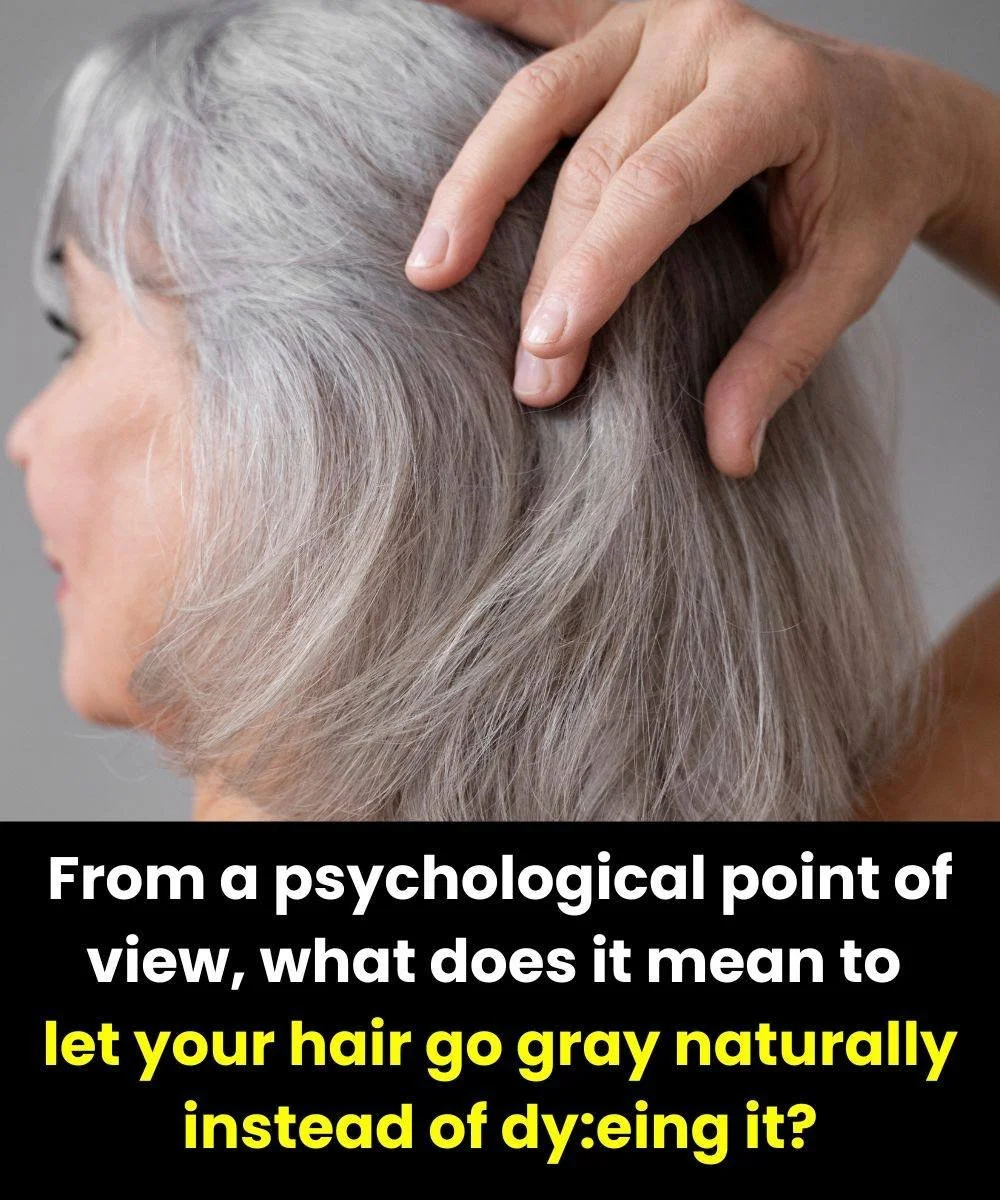
Why People Who Let Their Hair Go Gray Often Make Others Uncomfortable
At first glance, allowing your hair to go gray naturally appears to be a personal choice—a decision made in quiet defiance of societal norms. Yet, many who embark on this journey, particularly women, soon find themselves faced with an unexpected reality: discomfort from those around them. Awkward comments, unsolicited advice, subtle judgments, and sometimes outright irritation await. Why does a simple choice, such as letting one’s hair go gray, spark such strong reactions?
The answer lies less in the hair color itself and more in the complex interplay of psychology, social norms, and our unspoken fears about aging.
Gray Hair Disrupts the Illusion of Control
Modern culture is profoundly invested in the notion that aging can—and should—be managed. Wrinkles are swiftly smoothed, hair dyed to conceal gray, and bodies reshaped to fit an ideal. This collective effort creates a comforting illusion: that if we work hard enough, we can negotiate with time itself.
When someone chooses to allow their hair to go gray, they are subtly refusing to participate in this illusion. It serves as a reminder to observers—often unconsciously—that control over time is an illusion and that aging is inevitable. The discomfort doesn’t stem from the hair’s color but from the stark truth that grays reveal—a truth that many prefer to ignore.
It Challenges Social Expectations, Especially for Women
The perception of gray hair shifts dramatically based on gender. On men, gray is often associated with being “distinguished” or “experienced.” In contrast, women who allow gray to show tend to be viewed through a lens of neglect, decline, or lack of effort. This ingrained double standard places a heavier burden on women to maintain a youthful and polished appearance far longer than men.
Consequently, when women let their hair go gray, observers can feel uncomfortable, sensing that the individual is defying the expectations society has imposed on them. This decision can be interpreted as a refusal to adhere to the unspoken roles women are expected to fulfill.
It Signals Independence from External Validation
Many individuals rely on external approval more than they realize for their sense of security. Appearance becomes a way to communicate belonging and effort: “I care,” “I’m trying,” or “I fit in.” Thus, a person who embraces their gray hair may be seen as stepping outside this social contract. Their confidence in this choice can be unsettling for those who still seek validation through societal norms.
Psychologically, this reaction is known as projection. The discomfort isn’t about the gray-haired individual but what their choice reflects back to onlookers: a challenge to question their need for approval. What if one didn’t need that validation either? Such a realization can be disconcerting.
Gray Hair Refuses to Apologize for Aging
In many cultures, aging is viewed as something to be softened, disguised, or quietly hidden. Gray hair defies this narrative. It stands out: visible, honest, and unedited. As a result, people often expect those embracing their natural gray to justify their choice, needing reassurances that they haven’t “given up.” The absence of an explanation can feel confrontational—not out of aggression but because it unapologetically embraces a reality many prefer to disguise.
It Represents a Different Relationship with Time
Letting hair go gray frequently symbolizes a psychological shift: transitioning from resisting the stages of life to integrating them. It’s a movement from striving to appear younger towards embracing wholeness in identity. This paradigm shift can unsettle others still caught in the battle against aging.
The narrative introduced with gray hair suggests that self-worth is not solely tied to youth and that identity need not be frozen in its most socially rewarded version. For those not ready to accept this new perspective, the presence of someone who has made that leap can feel destabilizing.
The Discomfort Is Rarely About Hair
Ultimately, those who allow their hair to go gray don’t provoke discomfort because of their appearance. Instead, they embody something quietly radical: an acceptance of self without apology. They reflect autonomy, expose cultural anxieties, and disrupt societal expectations without seeking permission. In a culture steeped in performance, even silent resistance is often met with unease.
Conclusion
Choosing to let your hair go gray is more than a beauty choice; it’s a statement about acceptance, autonomy, and the complex nature of aging in our society. For many, it inspires reflections on their relationship with time and the societal pressures woven into our identities. So, the next time you encounter someone proudly flaunting their silver strands, remember—what may seem uncomfortable on the surface often reflects deeper truths about our collective journey through life.