
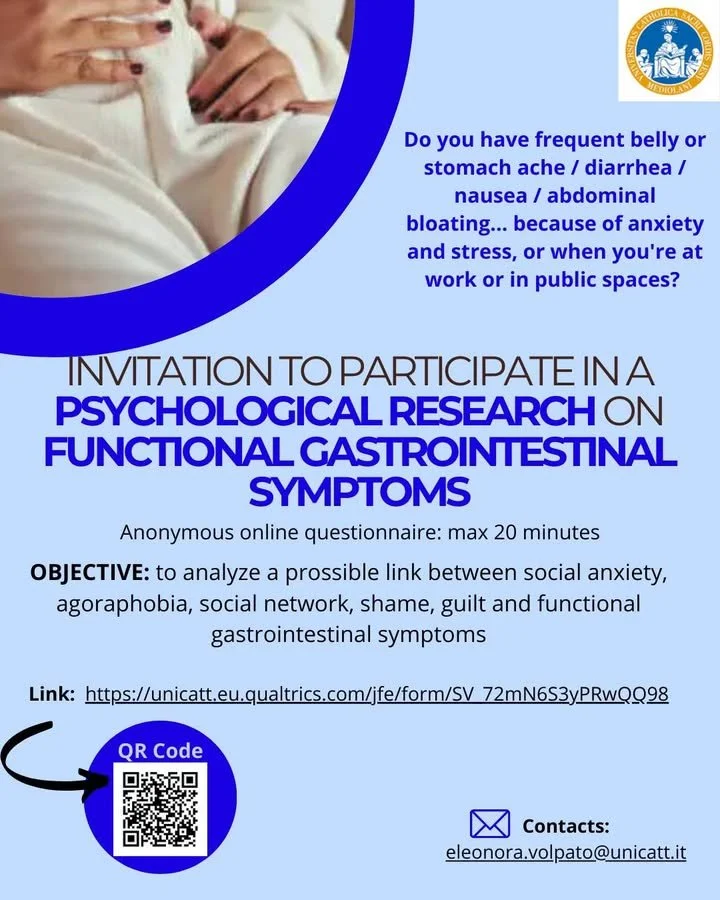
Are Your Stomach Issues Affecting Your Daily Life? Join a Study to Help Understand the Connection!
Do you often find yourself battling frequent belly or stomach aches, diarrhea, nausea, or abdominal bloating? If these uncomfortable experiences rear their head in stressful situations—like when you’re at work or in public—you’re not alone. Many individuals struggle with these symptoms, particularly those facing anxiety and stress.
A fascinating research study conducted by the Università Cattolica del Sacro Cuore in Milan, Italy, is aiming to shed light on the potential links between these gastrointestinal issues and social anxiety, agoraphobia, shame, and guilt. By participating, you’ll be contributing to an essential area of psychological research that seeks to better understand the intricate relationship between mental health and bodily responses.
Why Participate?
Your engagement could not only help you gain insight into your own health challenges but also support the broader community by providing valuable data that may lead to improved understanding and treatments for people experiencing similar issues. The electronic questionnaire is both anonymous and concise, taking only about 15-20 minutes of your time.
What’s Required?
Participation is easy! If you’re interested in taking part, simply access the questionnaire here. Your responses will play a crucial role in analyzing how social dynamics and emotions impact gastrointestinal symptoms, making each survey response a stepping stone towards greater knowledge and care in this area.
Expected Outcomes from Your Participation
By allowing your insights to be part of this study, you may uncover patterns that resonate not just with your experiences but with those of many others. Greater awareness could lead to strategies for managing stress and anxiety-related symptoms, helping you and countless others navigate these challenges effectively.
Extra Insights to Consider
While engaging in the survey, think about the ways anxiety has interacted with your physical health. Have you noticed patterns in your symptoms when you’re faced with public interactions or stressful environments? Taking time to reflect on these connections can not only aid the researchers but might also provide you with personal clarity and understanding.
Conclusion
Feeling overwhelmed by gastrointestinal discomfort tied to stress and anxiety doesn’t have to be your norm. By participating in this study, you’re taking a proactive step towards understanding how these complex factors intertwine. Each response adds weight to the research, helping pave the way for solutions that could benefit many. So don’t hesitate—join the study today, and make a difference for yourself and others!
Access the anonymous questionnaire here and thank you for your support in advancing psychological research!